
By using this site, you are consenting to our use of cookies. To find out more visit our privacy policy.
Each year, APTA's academies and sections select standout research to feature at APTA CSM. Meet some of the authors behind this year's abstracts and learn what their findings mean for physical therapist practice. More spotlights will be added in the coming weeks.
See their work in person in Philadelphia, Feb. 4-6. Register by Nov. 4 for early bird rates.
Pediatric
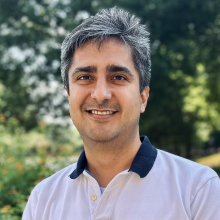 Owais A. Khan, PT, PhD
Somatosensory Cortical Responses Differentiate Responders from Non-Responders to Gait Training In Individuals with Cerebral Palsy
Researchers used MEG to compare somatosensory cortical changes in 28 individuals with cerebral palsy after eight weeks of gait training, aiming to identify markers of treatment responsiveness.
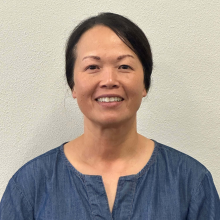 Thuha T. Hoang, PT, MHS, PhD
Caregivers and Participants' Perceptions of Power Training Combined with Interval Treadmill Training In Cerebral Palsy
Researchers compared power plus interval treadmill training (PT3) with traditional strength plus treadmill training in 38 youth with cerebral palsy to assess perceived changes in function, activity, and participation.
Leadership
 Sam Pak
Addressing Physical Therapy Access Gaps: Impact of Embedded Scheduling Tools on Patient Language Preference
Researchers conducted a quasi-experimental interrupted time-series study of 19,260 outpatient rehabilitation referrals to evaluate whether adding visible language preference information and a language-based filter within the Epic EHR scheduling workflow improved timely scheduling of patients who preferred a non-English language.
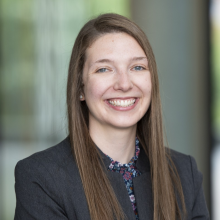 Sarah Schwab-Farrell
Disability Attitudes of Rehabilitation Professionals from the Perspective of Adults with Cerebral Palsy
The researchers conducted qualitative, one-on-one interviews with 15 adults with cerebral palsy and used phenomenological thematic analysis to explore how rehabilitation professionals' disability-related attitudes affected their experiences receiving adult physical and occupational therapy care.
Geriatrics
 Cassidy Weeks, PT, DPT
Rehabilitation Staff Turnover and Variation In High Intensity Rehabilitation Implementation across Skilled Nursing Facilities
The researchers conducted a secondary analysis of 15 skilled nursing facilities participating in a trial of high-intensity rehabilitation (i-STRONGER) to examine how rehabilitation staff turnover and staffing disruptions differed among sites with low, moderate, and high implementation success.
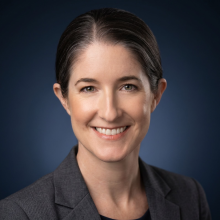 Rachel Ann Prusynski, PT, DPT, PhD
Predictors of Therapy Intensity In Skilled Nursing Facilities: A Machine Learning Analysis
The researchers analyzed data from 1.66 million post-acute skilled nursing facility stays using machine learning models to identify and rank patient, facility, and COVID-19-related factors associated with rehabilitation therapy intensity after implementation of Medicare's Patient-Driven Payment Model.
Cardio
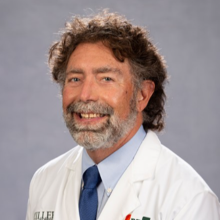 Lawrence P. Cahalin
The Pittsburgh Sleep Quality Index Provides Critical Management Decision-Making Information In Older Adults
The researchers measured respiratory muscle performance and self-reported sleep quality in 17 older adults with subjective cognitive complaints to examine whether stronger respiratory muscles were associated with better sleep quality.
 Jinghui Yang
Acute Cardiovascular and Cognitive Responses to Blood Flow Restricted Walking In Healthy Males
The researchers conducted a randomized crossover study in 11 healthy adults to compare the effects of different blood flow restriction walking protocols on arterial stiffness, blood lactate levels, and executive function.
Presenting a poster? Find presenter information and deadlines.